
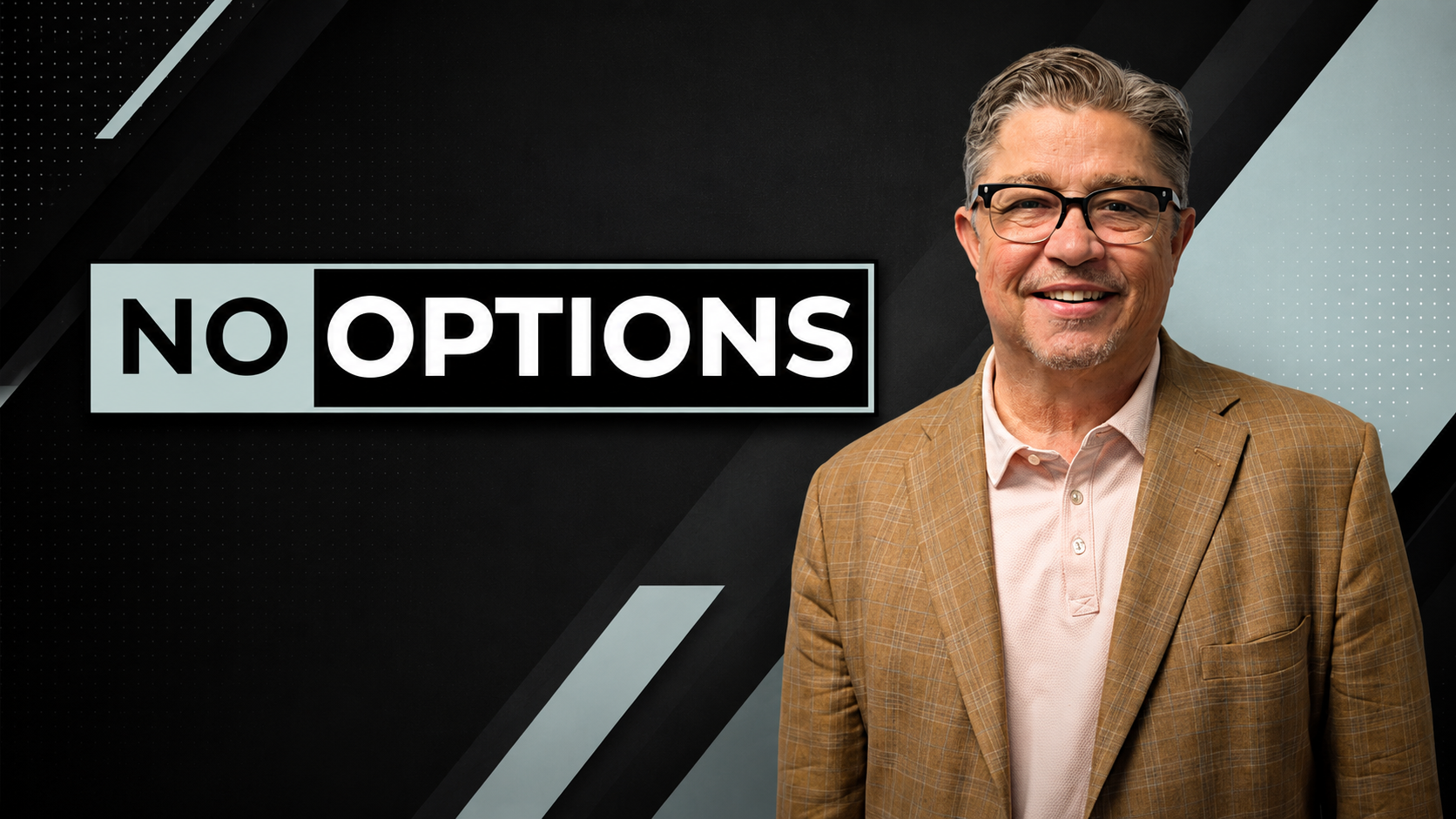
After battling juvenile diabetes, kidney failure, dialysis and multiple transplants, Gipson now uses his story to encourage others to keep going.
A Bearkat with a story of hope
HUNTSVILLE, Texas – Ty Gipson has every reason to understand the value of one more day.
The Sam Houston State University alum has lived a life marked by faith, family, business, adversity and the generosity of organ donation. Diagnosed with juvenile diabetes at age 8, Gipson has endured decades of health challenges, including kidney failure, dialysis, a kidney and pancreas transplant, the eventual failure of those organs and a later kidney transplant from his wife.
Through it all, Gipson says his story is not just about illness. It is about purpose, perseverance and what can happen when people are willing to give.
“I’m on borrowed time,” Gipson said. “Every day is a bonus day to me.”
Today, Gipson shares his story through public speaking, organ donation advocacy and his podcast, No Options with Ty Gipson, where he talks with people who have faced adversity and found a way to keep moving forward.
Roots in Southeast Texas and Huntsville
Gipson grew up in southeast Texas, near the Texas-Louisiana border along the coast. His road eventually led to Huntsville, where he attended Sam Houston State University around 1989 and 1990.
His connection to Huntsville began through family. His sister was already attending Sam Houston, and Gipson said his father helped make the decision simple.
His father’s message was direct: his sister had a place in Huntsville, so that was where Gipson was going.
At first, Gipson was not sure Huntsville was where he wanted to be. Looking back, he says the city and university became a meaningful part of his life.
“I tell people this all the time,” Gipson said. “That was some of the best times. I enjoyed Huntsville and I still do to this day. I love Huntsville, Texas.”
Gipson said Huntsville was different then, but the experience left him with lifelong friendships and a lasting love for Sam Houston.
“I met some amazing people and I’ve got lifelong friends that I still talk to this day,” Gipson said.
The words that shaped his mindset
Long before Gipson began sharing his story publicly, he was learning how to keep moving.
As a young boy facing juvenile diabetes, he said his father often gave him a direct message when life got hard.
“My dad was one of those guys that said, ‘Dust off, boy, you’ll be all right. Put a Band-Aid on. Nobody wants to hear your problems,’” Gipson said.
At the time, Gipson said those words could feel harsh. Later, after years of medical challenges, surgeries, business pressure and uncertainty, he came to see them differently.
“I realized he was really preparing me for what my road ahead was because I kind of had to dust off and keep going a lot,” Gipson said.
That phrase, “dust off,” became more than something his father said. It became a way of living. Gipson would carry that mindset through childhood illness, business ownership, dialysis and transplant recovery.
It also became part of the message he shares today. Life may knock people down, but Gipson believes there are moments when the only option is to dust off and keep going.
Building businesses through hard seasons
After college, Gipson’s path eventually moved into business ownership.
In 2006, he opened a printing and sign company, a Minuteman Press franchise. His wife, Crystal, brought strengths in accounting and business operations, while Gipson leaned into his background in graphic design.
One of Gipson’s degrees from Sam Houston was in graphic design, and he had always been a sports fan. Over time, he began looking for a way to combine those two passions.
That opportunity came through athletic branding.
Gipson started creating graphics inside athletic stadiums. What began with local opportunities grew as coaches moved from school to school and continued calling him for work.
“We started doing this stuff and it started, you know, as the coaching shuffle would go, coaches would call me from other places and this thing started growing,” Gipson said.
That work eventually became its own company, Waterboy Graphics.
The company grew significantly, eventually reaching about 45 employees. Gipson said Water Boy Graphics has done branding work around the country, including work connected to major athletic brands such as Under Armour, Nike and Adidas.
Gipson and Crystal later sold Minuteman Press. About a year and a half before the interview, they also sold Water Boy Graphics, though Gipson remains involved in the company in a role that allows him to focus more on the work he enjoys.
He said the decision to sell Water Boy Graphics was not immediate. When a group first approached him about buying the company, Gipson said he said no. They came back again, and eventually he and Crystal began to seriously consider it.
“If they say the right number, what are we doing?” Gipson said.
Even after the sale, Gipson said the company remains part of his life. He still has a role with Water Boy Graphics, but the sale allowed him to carve out some of the responsibilities he did not enjoy as much and focus on the areas where he could make the greatest impact.
Small business and no easy road
Gipson’s business journey was not built during easy economic conditions.
He and Crystal started the business in 2006. By 2008, the country was facing a financial crisis, and Gipson said they had opened at what turned out to be a difficult time.
But quitting was not the mindset.
When people ask how they got the business going, Gipson gives a simple answer.
“I got a good pair of tennis shoes and a box of business cards,” he said. “If it had a doorknob on it, man, I was going in saying hello and just meeting people.”
That approach reflected the same mindset he learned from his father: dust off and keep moving.
Gipson said small business ownership is one of the hardest things a person can do, but also one of the most rewarding.
“Shout out to these small business owners because it’s probably the hardest thing you’ll ever do,” Gipson said. “But it’s also the most rewarding thing you’ll ever do. You learn a lot about yourself when you have a small business.”
Diagnosed with juvenile diabetes at age 8
Gipson’s health journey began early.
At age 8, he was diagnosed with juvenile diabetes. At the time, the technology available to diabetic patients was not what it is today.
By age 10, Gipson said his diabetes had become so difficult to manage that he was treated at Texas Children’s Hospital in Houston. Doctors were working with diabetic patients on an early form of insulin pump technology.
The pump, Gipson said, was far larger than today’s devices.
“It was a pound nine. It was an insulin pump,” Gipson said. “It was a chemotherapy machine that they were putting insulin in, basically, at the time.”
That early pump gave him insulin throughout the day instead of requiring repeated shots. Through the years, he continued using different insulin pumps, including during his time at Sam Houston.
Gipson described his diabetes as brittle, meaning his blood sugar could swing dramatically. He said his levels could move from 45 to 450, creating an unpredictable and exhausting health battle.
Still, he stayed active. He played sports, hunted, fished and tried to live like other young people around him.
Looking back, Gipson said those years taught him that adversity can prepare a person for what is ahead.
“We all deal with adversity,” Gipson said. “Everybody has a story.”
Kidney failure and a difficult diagnosis
Around age 30, Gipson began feeling extremely bad.
He went to the doctor and received serious news: his kidneys were failing.
At first, Gipson said he did not know what to think. He had spent much of his life in and out of hospitals and was tired of facing more medical uncertainty.
The next day, his doctor explained that because of Gipson’s brittle diabetes, a kidney transplant alone might not be enough. The concern was that uncontrolled diabetes could damage a new kidney.
His doctor told him about research being done in Baltimore, Maryland, involving a kidney and pancreas transplant.
That type of procedure, Gipson was told, was what he needed.
Gipson went to Baltimore and became a candidate. His mother, who was 60 at the time, immediately offered to donate one of her kidneys if doctors approved it.
“Ty, God gives us two kidneys,” Gipson recalled his mother saying. “One of these kidneys are yours.”
His mother matched.
But the pancreas had to come from a deceased donor. That meant Gipson had to wait for a match, knowing that another family’s tragedy would be part of his chance for life.
He waited eight months.
A midnight call on Super Bowl Sunday
The call came at midnight on Super Bowl Sunday.
Gipson said he had stayed up trying to watch the game, made it to halftime and went to bed. Then the phone rang.
Baltimore had a matching pancreas.
“They’re like, ‘Hey, Ty, we’ve got a pancreas that matches. We need to get you here,’” Gipson said.
Gipson was in Texas. His mother was in Orange, Texas. They had to get to Baltimore quickly.
He described the process as something that felt like a movie. They rushed to get there, then had to wait.
The surgery involved multiple teams. His mother was in one operating room. Gipson was in another. A team of doctors worked with the donated organ in another room.
After 16 hours, the surgery was over.
When Gipson woke up, his mother was sitting beside him in a wheelchair in the recovery room.
Doctors told him that if he could get through the first year, he would likely be in good shape. But that first year was difficult.
Gipson said he took 65 pills a day. Many were anti-rejection medications. Others were needed to deal with the side effects of those medications.
“I mean, when I say 65, I mean 65 pills a day,” Gipson said.
About a year later, things began to improve.
“It’s like the light went off and I felt really good,” he said.
A new chapter after transplant
The transplant gave Gipson years he was not sure he would have.
After that surgery, he opened a business. He got married to Crystal. He adopted his second daughter, Ree. His first daughter, who had been 6 years old during the transplant season, continued to grow up with her father in her life.
Gipson said that daughter was one of the reasons he was willing to take the risk of the transplant, even with what he understood to be a 50-50 chance at the time.
He did not want dialysis to keep him from being present for her.
Years later, Gipson experienced a moment he once was not sure he would live to see.
About a year before the interview, he walked his daughter down the aisle at her wedding.
“I never dreamed I would see people at graduations and see pictures of weddings or go to weddings,” Gipson said. “About a year ago, I got to walk her down the aisle.”
For Gipson, that moment was a reminder of what organ donation made possible.
When the organs began to fail again
Gipson said his pancreas lasted 12 years. During those 12 years, he did not have diabetes.
His mother’s kidney lasted 20 years.
Then, around 2019, Gipson began feeling bad again. His kidneys had failed.
He was placed on dialysis three days a week from 4:30 to 9 a.m. in Georgetown. After dialysis, he would go to work.
Gipson said he tried to carry himself as though nothing was wrong, even though others could see the toll it was taking.
“I would go in there and act like nothing is ever happening,” Gipson said. “People could see it all over me. I didn’t feel good.”
That season again required the “dust off” mindset. He would go to dialysis, go to work, try to be the face of the business and then go home exhausted.
His sister was initially lined up as a donor, but near the end of the process, doctors determined there were concerns that prevented her from donating.
Then Crystal stepped forward.
Because she and Gipson had different blood types, Crystal planned to donate her kidney to someone else as part of a process that could help move Gipson higher on the transplant list.
Then she called him crying.
Gipson said he immediately wondered what was wrong.
“She says, ‘Ty, I match you perfectly,’” Gipson said.
Six years before the interview, Gipson received his wife’s kidney.
“It’s been the best six years of my life,” he said.
Organ donation gave Gipson more time
Gipson’s life has been directly shaped by organ donation.
His mother gave him a kidney. A deceased donor gave him a pancreas that allowed him to live 12 years without diabetes. His wife later gave him a kidney that continues to give him more time with his family.
Gipson said some people are surprised to learn pancreas transplants are performed, though he noted they are not as common and can be challenging.
He did not receive another pancreas transplant during his later kidney transplant. He now uses an insulin pump again, bringing his life full circle from the nearly 2-pound early pump he wore as a child to a modern pump that weighs only a few ounces.
His story also has encouraged others to become organ donors.
Gipson said when he first began sharing his story more openly, people told him they planned to sign up as organ donors because of what they heard.
For Gipson, that helped him realize his story was not only his own. It could help someone else.
Learning to share the story
For years, Gipson did not talk much about what he had been through.
The “dust off and keep going” mentality helped him endure, but it also kept him from sharing the story in ways that might encourage others.
That began to change after a family reunion in Houston.
Crystal asked him if he would share his story with relatives. Gipson agreed, though he admitted his first thought was that if they wanted to hear his problems, he would tell them.
On the drive home, he began receiving text messages from family members. Some thanked him for sharing. Some said they were going to sign up to be organ donors. Others said the story helped them push through something they were facing.
That moment changed his perspective.
“I thought, well, how selfish am I if I can truly help some people by just simply telling my story?” Gipson said.
That led him to become involved with the Texas Organ Sharing Alliance, where he shared his story with different groups.
Later, after selling the business, Crystal encouraged him to do even more.
“She said, ‘You need to get out and share your story,’” Gipson said.
The meaning behind No Options
Gipson now uses his story through public speaking and through his podcast, No Options with Ty Gipson.
The name came from the pattern of his life.
When he was facing a kidney and pancreas transplant, he felt he had no option if he wanted to be there for his daughter. When he and Crystal opened their business in 2006 and then faced the financial challenges that came with the 2008 downturn, he said they had no option but to keep going.
The phrase also connects back to the lesson his father taught him as a child. Dust off. Keep going. Do what has to be done.
Through the podcast, Gipson interviews people who have gone through different forms of adversity. His goal is to remind people that everyone is carrying something, and everyone has a story.
“I encourage people, everybody has a story, whether you think you do or don’t, you do,” Gipson said.
Grow or die, hope or despair, humor or drama
Gipson describes his approach to adversity as the “No Options mindset.”
He breaks it down into three parts.
The first is “grow or die.” Gipson said he does not mean physical death. He means the choice between growing through adversity or letting a difficult situation kill a dream, a purpose or a future.
The second is “hope or despair.” Gipson said it would have been easy to focus on why he had diabetes, why he needed transplants or why he had to go through so much. Instead, he tries to find the positive.
The third is “humor or drama.”
“Sometimes we just got to laugh a little bit,” Gipson said. “We got to smile because this is temporary.”
Gipson said laughter and a smile can become part of the healing process when life is hard.
A message for anyone going through adversity
Gipson’s final message is simple: people need each other.
He said the world is hard, and people should be willing to put their arms around each other and help one another through it.
“It doesn’t matter our religion, our race, our political thoughts,” Gipson said. “Sometimes we just need to throw our arms around each other sometimes and just help each other through this world because it’s a tough world out there.”
Gipson said faith has been a source of comfort for him. He also said mindset matters.
He encouraged people to take a small step today, get 1% better and keep building from there.
“Everything’s temporary,” Gipson said. “We can get through it, but our mind is so powerful.”
For Gipson, the story is not only about survival. It is about using what he has been through to help others survive their own hard seasons.
His life has included diabetes, dialysis, kidney failure, organ donation, business challenges, family milestones and moments he was not sure he would live to see.
Now, he is using that life to remind others that their story matters, too.
Organ Donation Can Save Lives Beyond One Story
Gipson’s story also serves as a reminder of the life-changing power of organ donation. His mother’s kidney, his wife’s kidney and the pancreas he received from a deceased donor gave him years, milestones and moments he once was not sure he would live to see. Now, he encourages others to consider making that same decision for someone else. One registered donor can provide lifesaving organs to as many as eight people, according to the U.S. Health Resources and Services Administration. Texans can register through Donate Life Texas, the state’s official organ, eye and tissue donor registry, or they can sign up when applying for or renewing a driver’s license or state ID. Nationally, people can also learn more and find their state registry through OrganDonor.gov. After registering, experts recommend telling family members about the decision so loved ones know and understand those wishes.
Learn more
Podcast: No Options with Ty Gipson
Website: tygipson.com
Ty's Interview on Good Morning Huntsville - May 28, 2026