

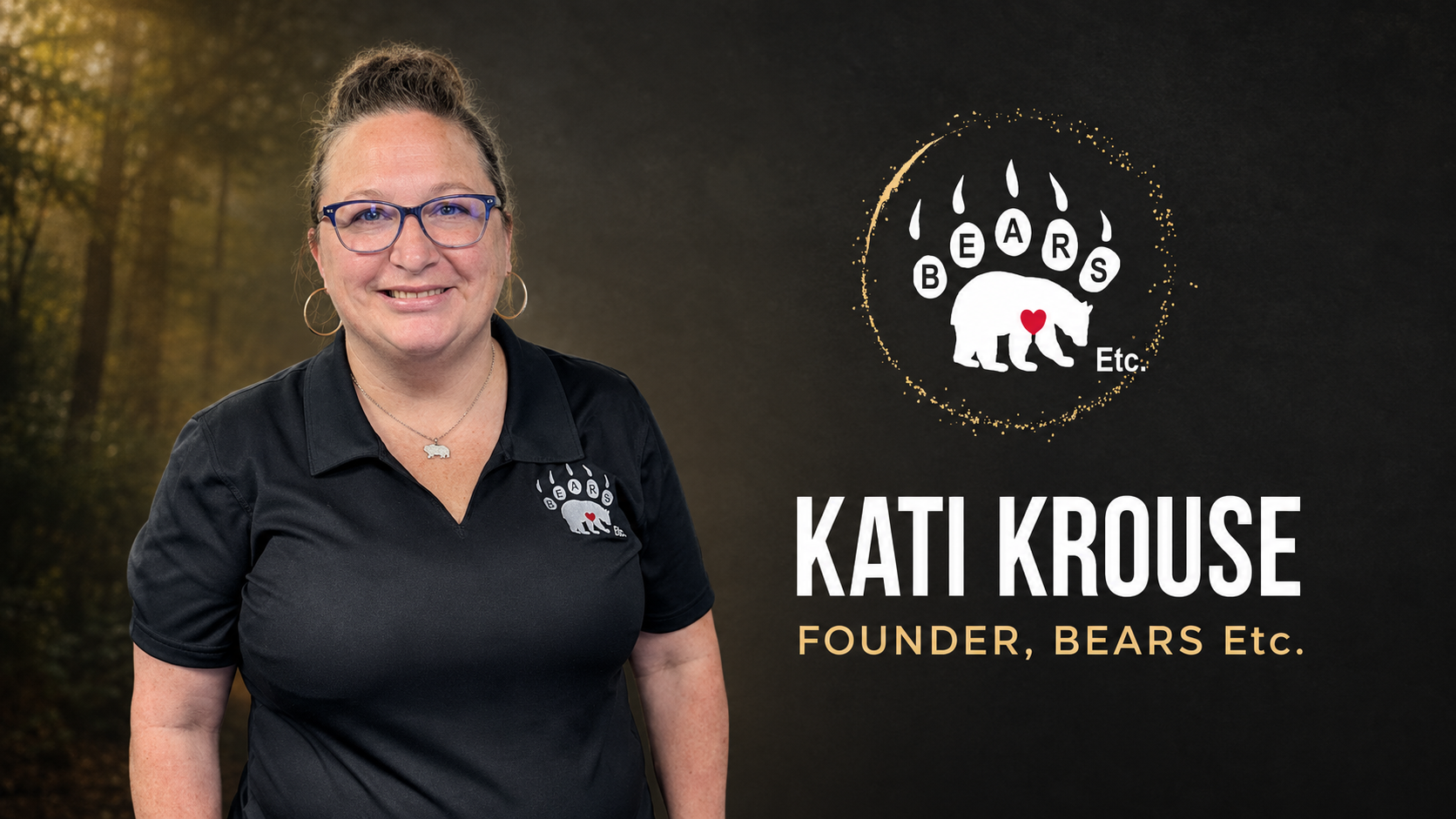
The sanctuary near Riverside is being developed as a permanent home for animals displaced from the exotic pet trade.
HUNTSVILLE, Texas. BEARS Etc. is developing a permanent refuge near Riverside in Walker County for bears and other captive exotic animals that can no longer remain with private owners or in other placements. The organization says its work centers on animals displaced from the exotic pet trade and on finding appropriate long-term care for species that cannot simply be released.
Kati Krouse, the founder and executive director of BEARS Etc., said the group is located near Riverside off FM 980 and has built its mission around a permanent-care model. Its current website describes the organization as a community-based refuge for displaced exotic and wild animals and says it is building a facility for neglected, abused and unwanted bears rescued from the exotic pet trade.
The work brings a specialized animal-welfare organization into Walker County, where questions about a captive exotic animal can involve the owner, animal control, state agencies and a network of species-specific rescues. BEARS Etc. says it can assist private owners who can no longer care for an animal, organizations involved in the exotic pet trade and animal-control agencies seeking placement options.
A Permanent-Care Model for Captive Animals
BEARS Etc. is not a wildlife rehabilitation program that prepares animals for return to their native habitat. Krouse said many animals entering the exotic pet trade are bred and raised in captivity, which affects what can safely happen after an owner gives them up.
"They don't know how to live in the wild," Krouse said while explaining why a captive animal may need permanent care. The point is especially important for animals that have grown up dependent on people and have not learned the behaviors that allow wild animals to find food, avoid danger and survive on their own.
The sanctuary's public mission describes the planned refuge as a place for displaced exotic and wild animals. Its site says the organization combines care with education and awareness about the natural world and the exotic pet industry. The organization also lists placements and assistance for a range of animals, including aviary and aquatic rescues, through its facilities and outside network.
Krouse's background in animal care predates BEARS Etc. The organization's founder biography says she worked for a veterinarian as a teenager, volunteered at Black Pine Animal Sanctuary, studied to become a veterinary technician at Purdue University and completed wildlife-care training and internships. The biography says recurring requests for help with bears, tigers, parrots and alligators exposed the limits that staff, funding and available space can place on sanctuaries.
Standards That Shape Sanctuary Care
Krouse described a sanctuary as an operation with limits on how animals are obtained and used. "A true sanctuary doesn't buy, sell, breed, trade, or use animals for entertainment," she said. The statement outlines the approach BEARS Etc. says it is taking as it develops its Walker County site.
The distinction matters because an animal's path into captivity can be complicated. A private owner may no longer have the space, money or ability to provide care. An animal-control agency may need help determining a placement. An animal can also need a transfer from a situation that is unsafe or unsuitable. In each case, placement requires assessing the species, its care needs and the capacity of the receiving organization.
BEARS Etc. describes its focus as animals from the exotic pet trade. Krouse said, "Our focus is out of the exotic pet trade." The organization’s website says it works to rescue and protect neglected and abused animals while also providing assistance to owners and agencies seeking solutions for an exotic animal in need.
The group's founder biography identifies BEARS Etc. as the first bear-centric sanctuary in the United States. The organization says it also works with animals beyond bears, which is reflected in its name and in the placement assistance described on its public site. The scope does not mean that every animal can be accepted immediately. Capacity, species needs, permits and safe transport all affect whether an animal can be placed at a particular facility.
Captive Wildlife Questions in Walker County
Krouse said the response to a report involving an exotic animal depends on the species and the circumstances. She pointed to Texas Parks and Wildlife as the relevant agency for a black bear, while federally protected species can involve the U.S. Fish and Wildlife Service. Residents who encounter a loose, injured or potentially dangerous animal should contact the appropriate public-safety or wildlife agency rather than try to capture or transport it themselves.
The organization’s work is separate from a public animal attraction. Krouse said the facility is not open for routine public visits, a policy that fits the permanent-care focus described by the sanctuary. BEARS Etc. does, however, identify volunteer opportunities on its website and says growing a volunteer base is necessary as its rescue capacity expands.
For people who know of an exotic animal needing help, BEARS Etc. directs inquiries through its official contact channels. Its website says the organization can help evaluate options, connect people with rescues and facilitate placement solutions when possible. A report should include the species, location, condition of the animal and any immediate public-safety concern so the appropriate agency or rescue can determine the next step.
The Walker County site remains part of a longer process of building capacity for permanent care. Krouse said the organization is working toward a refuge where animals that cannot return to the wild can receive care without being bought, sold or used for entertainment. The public mission frames that work around both animal care and education about the conditions that lead captive animals to need new homes.
About BEARS Etc.
BEARS Etc. is a Walker County nonprofit wildlife sanctuary that provides lifelong care for displaced exotic and wild animals, including animals surrendered by private owners, removed from unsafe conditions or transferred from facilities unable to provide proper care. The organization describes its Huntsville-area facility as the nation’s first bear-centered sanctuary and works to connect people with nature through rescue, education and public awareness. Learn more about its animals, volunteer opportunities and ways to support the sanctuary at BEARSEtc.org.