

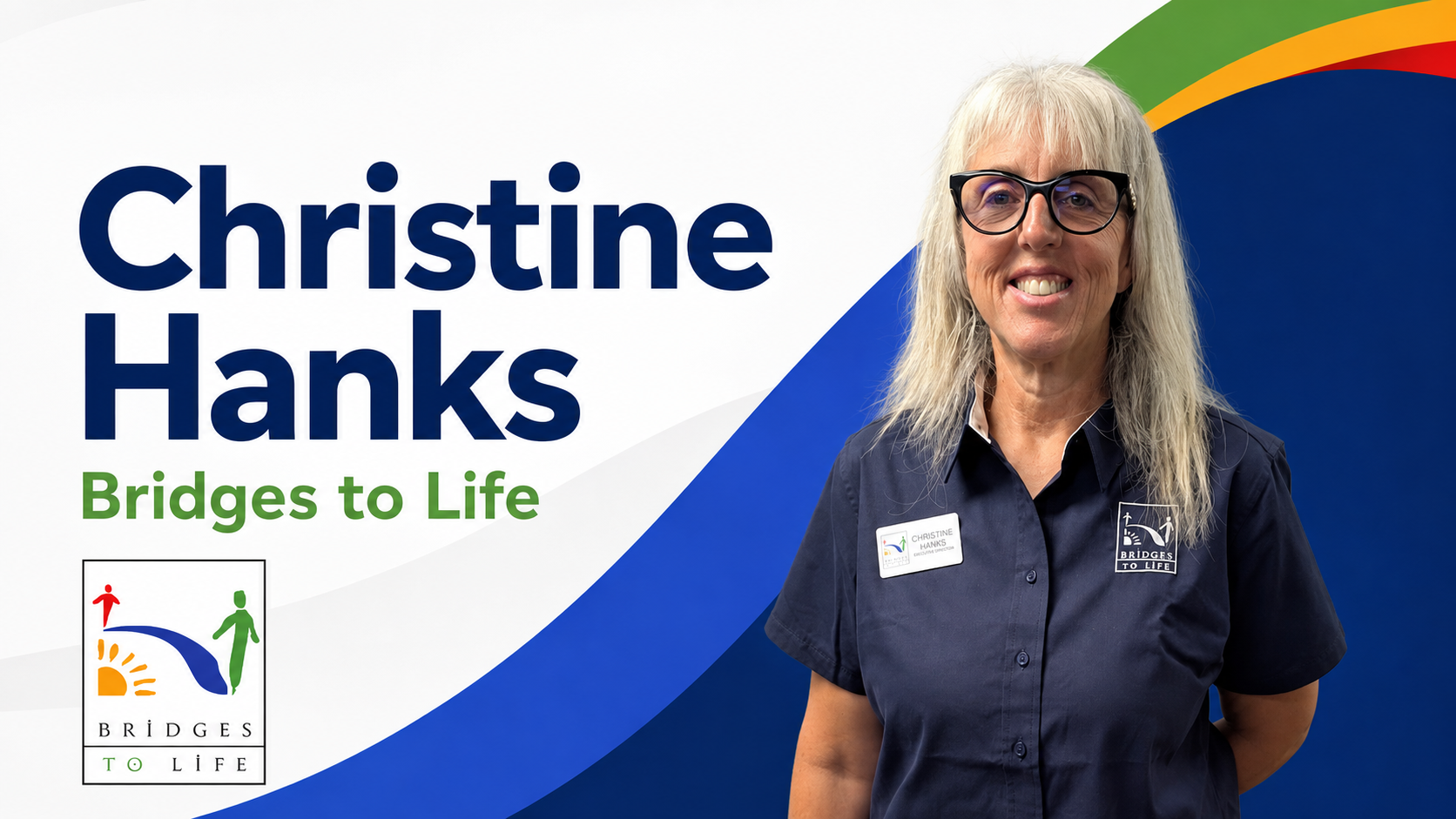
Regional coordinator Christine Hanks says facilitators and crime victim speakers help participants examine accountability, forgiveness and the effects of crime.
HUNTSVILLE, Texas. Bridges To Life is recruiting adult volunteers to serve in 14-week restorative justice programs at Huntsville-area prisons, where trained facilitators and crime victim speakers guide small-group discussions about responsibility, accountability, forgiveness and restitution.
Huntsville Regional Coordinator Christine Hanks said volunteers serve in consistent groups throughout each project. The organization provides training, and volunteers who enter Texas Department of Criminal Justice facilities must also complete the agency's approval and training requirements.
Bridges To Life lists the Byrd, Ellis, Estelle, Goree, Huntsville and Wynne units among the Huntsville-area locations it serves. Its regional list also includes the Ferguson, Polunsky and Wainwright units.
The nonprofit operates two program cycles during a typical year, with one beginning in late summer or early fall and another beginning after the holidays. Prison lockdowns and operating needs can affect the schedule.
Small Groups Work Through a Structured Curriculum
The Bridges To Life model places about 10 incarcerated participants with two volunteer facilitators. The same volunteers remain with their group throughout the program so participants have continuity while addressing difficult subjects.
Hanks said facilitators listen, ask questions and guide discussion through the organization's curriculum. Their role does not involve preaching or teaching. Each participant receives study materials and completes assignments connected to the weekly topic.
Subjects include crime and conflict, faith, personal stories, responsibility, accountability, confession, repentance, forgiveness, reconciliation and restitution. The sequence is designed to help participants recognize the effects of their actions on direct victims, relatives and the wider community.
Participants begin sharing their own stories in small groups during the program. They also write letters that address responsibility and forgiveness. A letter to the victim of a crime is not mailed. Another letter may be directed to a family member. The exercise gives participants a structured way to identify harm and consider the people affected by their choices.
The final week includes a graduation where participants can explain what they learned. Graduates receive certificates documenting completion. Hanks said the closing sessions often reveal changes in how participants understand responsibility and the existence of victims connected to offenses that may initially appear indirect.
Bridges To Life describes its mission as connecting communities to prisons in ways that reduce recidivism. The organization began in 1998 after founder John Sage's sister, Marilyn, was murdered. Sage developed the program from his experience as a victim's family member and a desire to prevent other families from enduring similar harm.
Crime Victim Speakers Bring Consequences Into Focus
Crime victim speakers participate during several weeks of the curriculum. They tell their own stories so incarcerated participants can hear how crime continues to affect people long after the immediate event.
Hanks entered the organization through that role. She is a survivor of domestic violence and began volunteering in 2016 after searching for a way to help another woman leave a dangerous situation. Her first response to the idea of entering a prison was reluctance. She eventually spoke at a women's unit in Gatesville and continued serving.
She joined the Bridges To Life staff five years later and now coordinates the Huntsville region. Hanks said telling her story became part of her own healing while helping incarcerated men and women understand consequences they may not have considered.
The organization allows a qualified volunteer to serve as a facilitator, a crime victim speaker or both. Hanks said victim speakers sometimes hear participants acknowledge for the first time how their words and actions may have affected a spouse, partner or relative.
Sharing a story requires care. Bridges To Life trains and supports volunteers, and a survivor decides whether the role is appropriate for that person's stage of healing. The organization's website also provides crime victim resources for people who want information without entering a prison program.
Hanks said forgiveness does not erase what happened. She described it as part of moving forward without allowing past harm to control every part of the survivor's life. Her account gives the program a direct connection between the needs of victims and the work of offender accountability.
Huntsville Volunteers Can Support a Regional Effort
Bridges To Life says prospective volunteers must be at least 18. Those working inside a TDCJ facility complete the required state process in addition to the nonprofit's training. Current projects, meeting dates and available roles vary by unit.
The organization reports that its program has operated across Texas and beyond. Its official location page identifies correctional units by region and provides a contact address for the Huntsville coordinator. The nonprofit also accepts donations from people who cannot volunteer.
The need for community participation is especially visible in Huntsville, where state prisons are a major part of the region. Volunteers can bring consistency and a listening presence into a structured setting while maintaining the boundaries required by TDCJ and the organization.
Hanks said the work attracts incarcerated participants with different sentences and circumstances. Some expect to return to their communities, while others are serving long sentences and want to make constructive changes within the unit. The curriculum asks each participant to examine present choices and relationships regardless of release date.
Bridges To Life reports program outcomes through its own internal data. Those figures should be understood as the organization's measurements rather than a guarantee for any participant. The nonprofit's 2025 annual report and program materials provide additional information about its reach and methods.
People interested in volunteering can review the application process and regional contacts at https://www.bridgestolife.org/. The site also includes program descriptions, crime victim resources and ways to support the organization financially.