
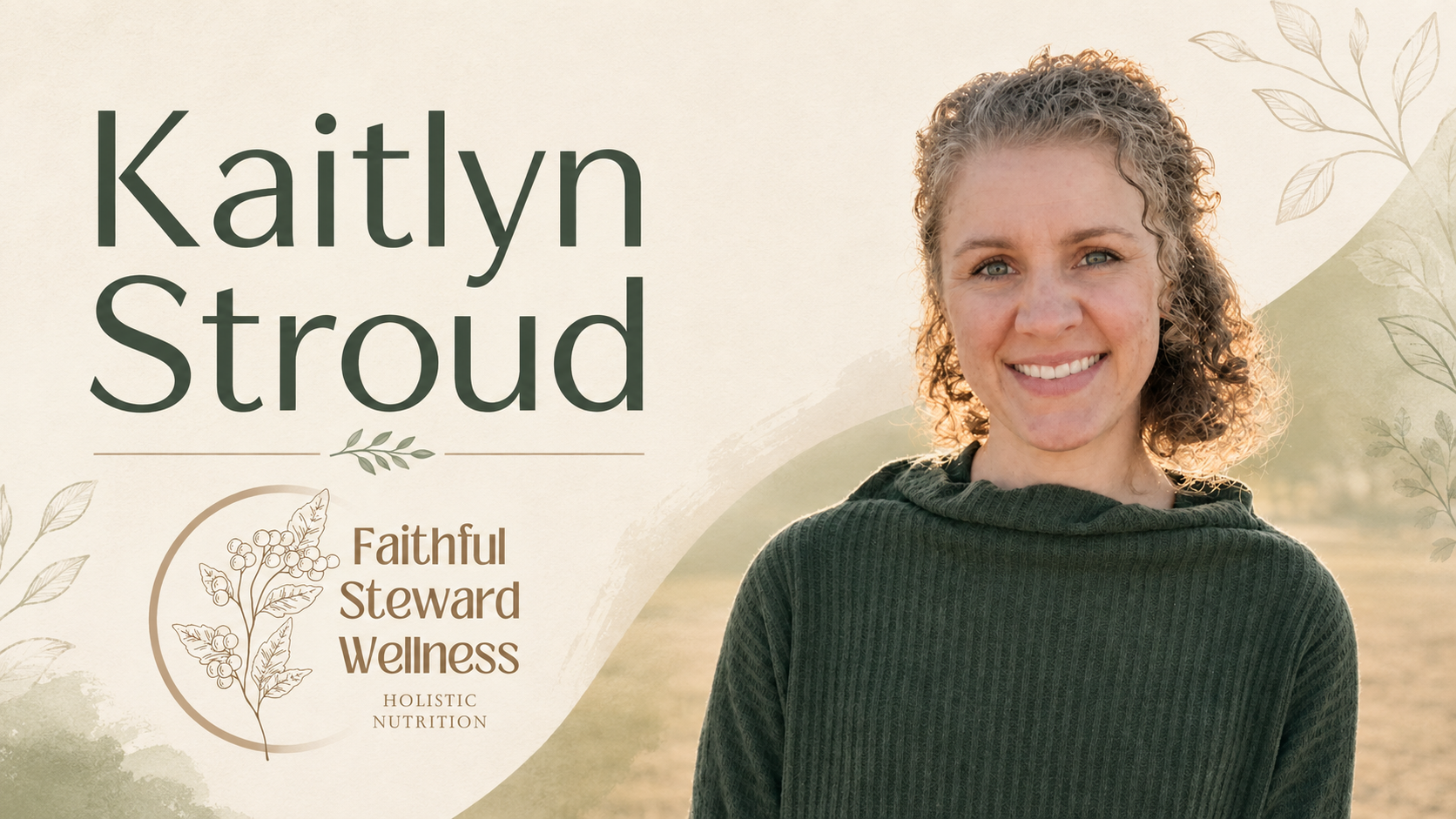
The Faithful Steward Wellness practitioner describes one-on-one planning, weekly check-ins and practical food resources for Huntsville clients.
HUNTSVILLE, Texas. Kaitlyn Stroud is building her Faithful Steward Wellness work around a question that can be easy to overlook when someone is trying to change a daily habit. What can a plan realistically look like in the life a client is already living?
Stroud, a holistic nutritionist and nutritional therapy practitioner, describes her Huntsville-area work as individualized nutrition support for people who want to examine food habits alongside the routines that shape them. Her approach begins with a conversation about what a client is experiencing and continues through regular check-ins, practical resources and adjustments as a plan meets real schedules.

That framing matters because broad nutrition advice can be hard to apply. A parent navigating school mornings, a shift worker with an irregular meal schedule and a person trying to cook more at home may all want more consistent energy or a more reliable routine. Their days can look very different.
The first conversation sets a practical starting point
Stroud said prospective clients begin with a free call that gives her a chance to hear what they want to address and what their routine currently allows. “Whoever reaches out to me will do a free call,” she said. “It's about an hour of us just talking, you telling me all of your symptoms, everything you've been struggling with.”
She said the conversation includes questions intended to identify a practical starting point. After that, Stroud said she builds a plan around the client rather than handing over the same template to every person. “I'm building a plan that's custom to you,” she said, describing a process that includes goals, timing and the first changes a client can reasonably attempt.
Her official website describes a 12-week one-on-one program that considers food, sleep, stress, digestion and day-to-day circumstances. Those are areas people may want to discuss as part of general wellness planning. They are also areas where symptoms can overlap with medical conditions, which is why a nutrition-support conversation should remain distinct from medical diagnosis or treatment.
A careful first conversation can also help a client decide whether the service is a fit. It gives the person a chance to ask about the program, the scope of support, cost and the kinds of changes a nutrition practitioner may help them organize. It also gives the practitioner a chance to direct someone toward licensed medical care when a concern falls outside that scope.
Weekly check-ins keep a plan connected to real life
Stroud said the work is designed to continue after the initial plan. “There's absolutely a lot of coaching in it, too,” she said. “We meet every week for an hour just to make sure that you're implementing things well.”
Those meetings can be a place to talk through a change that has been harder than expected. A meal-prep idea may have clashed with a work schedule. A grocery plan may have been unrealistic for a household. A person may need to slow down a goal, simplify it or identify a barrier that was not clear during the first conversation.
Stroud said ongoing support includes email access and a client portal. She described resources such as recipes, a food-label reading course and general guides related to digestion and stress management. The point is to give clients information they can revisit on their own time, rather than expecting every decision to be made in a weekly meeting.
That structure reflects a coaching model. It is built around discussion, planning, accountability and adjustments to daily habits. It does not replace the work of a physician, registered dietitian or licensed mental health professional when a person needs diagnosis, treatment, medication management or specialized medical nutrition therapy.
Food decisions happen alongside sleep and stress
Stroud said food choices are part of a larger daily picture. Sleep, stress, work demands, family responsibilities and access to food can all shape whether a person has the time and energy to make a planned meal. A client may begin with one repeatable breakfast, a more predictable grocery list or a way to make food-label information easier to understand.
In the interview, Stroud discussed protein- and fiber-containing foods as examples of choices she may talk through with clients. The relevant detail is not a universal menu. A food routine that works for one person may not suit another person’s preferences, budget, health needs, medications or medical restrictions.
Readers with diabetes, kidney disease, food allergies, pregnancy-related concerns, eating-disorder symptoms or other health conditions should seek advice from the licensed clinician managing their care before making major nutrition changes. Sudden or severe fatigue, unintended weight changes, persistent digestive symptoms or significant mental-health symptoms also deserve medical evaluation.
Stroud’s work offers a local option for people who want structure around everyday nutrition habits while keeping medical care in its proper place. Her upcoming Immune Support Class is already listed for Oct. 16 at The Granary in Huntsville. Readers can find registration information in the existing Hello Huntsville event listing.
Disclaimer: This content is for educational purposes only and is not medical advice. Holistic nutrition support does not replace medical care, diagnosis, or treatment. Serious or ongoing health concerns should be evaluated and treated by a licensed medical professional.
Visit Faithful Steward Wellness online at http://faithfulstewardwellness.com/