

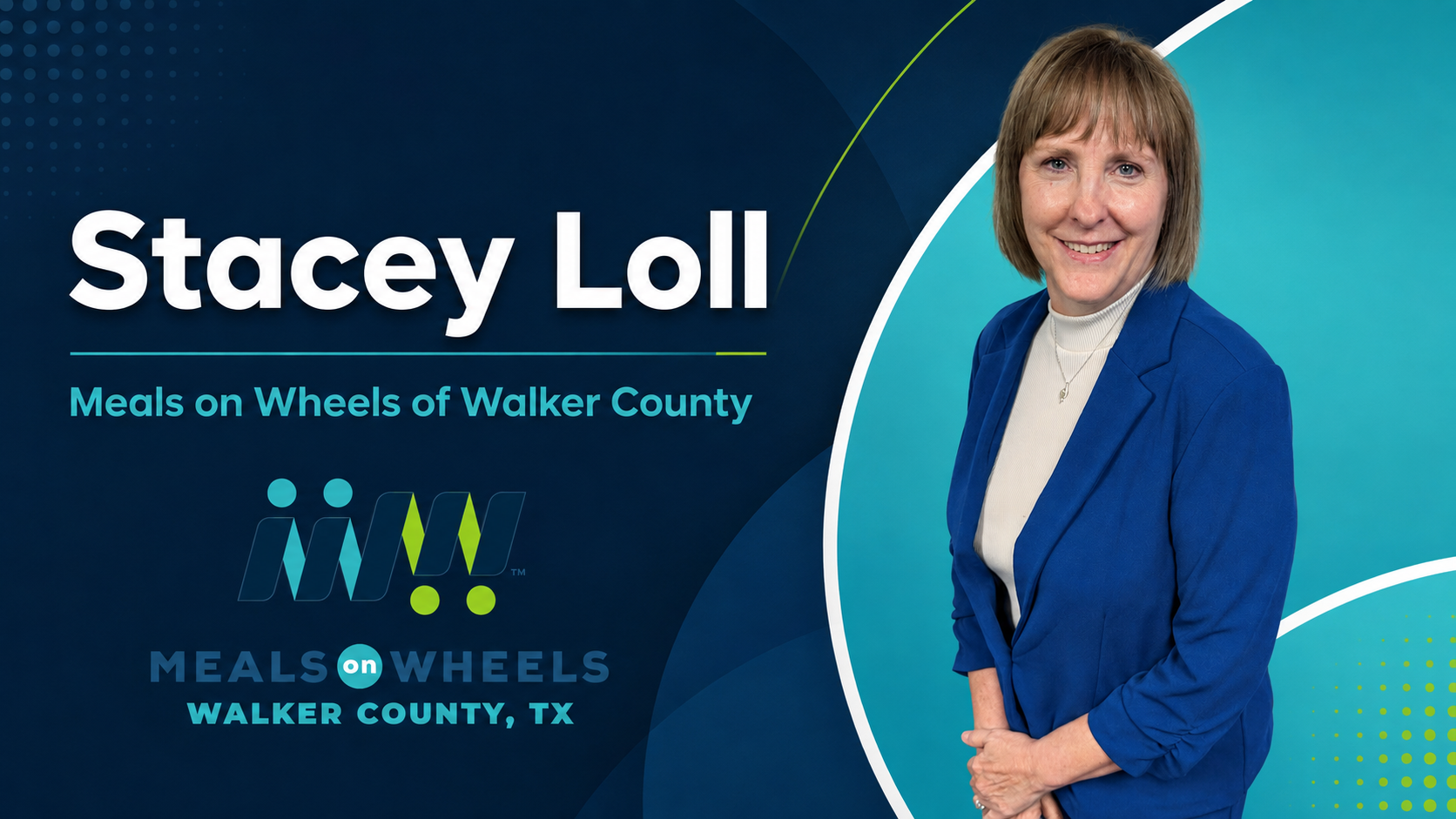
The nonprofit delivers meals across the county, checks on homebound residents and provides weekday activities at its Huntsville center.
HUNTSVILLE, Texas. Meals on Wheels Walker County is serving older and disabled residents throughout the county with home-delivered meals, safety checks, transportation and weekday activities designed to help people remain connected and independent.
The Huntsville-based nonprofit delivers to communities reaching the edges of Walker County, including Riverside, Crabbs Prairie, New Waverly and Dodge. CEO Stacey Loll said volunteers cover about 10 delivery routes and provide every home-delivered meal without paid delivery staff.
The organization was serving 182 people when Loll provided an August update. Fifty-nine participants came to the center for meals and activities, while volunteers delivered to 123 homebound residents. Loll said the program was averaging more than 45,000 meals, excluding shelf-stable food distributed for hurricane preparation.
Meals on Wheels Walker County traces its history to 1977, when local volunteers created a place for older residents to gather for lunch and companionship. Home delivery came later. The program moved into its current location at 340-F State Highway 75 North in 1985 and has continued expanding its nutrition and social services.
Meal Delivery Also Provides a Safety Check
Volunteers deliver fresh meals regularly within Huntsville. Residents on farther county routes receive five meals during a weekly delivery, according to Loll. The volunteer at the door also checks the participant's well-being.
That contact can be critical for people who live alone or have limited family nearby. Loll said some participants may see no one else during the week. Staff make follow-up telephone calls, and a missed delivery begins a process that can involve the participant's emergency contact and a request for a welfare check when the person's safety cannot be confirmed.
The program's procedures give volunteers a clear responsibility without turning them into health care providers. A driver observes whether the participant answers the door and whether something appears different. Staff then use contact information and established steps to determine whether additional help is needed.
Two longtime volunteers demonstrated the value of that connection when they noticed that a man on their route appeared to have a medical problem. They helped him contact his physician and reach an appointment. While he was away, his home exploded, Loll said. The volunteers later helped him find a safer living arrangement, and the organization remained in contact with him after deliveries ended.
Most visits do not involve that level of emergency. The daily pattern still matters because a familiar volunteer may recognize a change that would otherwise go unseen. The delivery also creates a brief conversation and a dependable point of contact.
Loll said men often complete routes individually, while women sometimes pair up and have lunch together afterward. Couples also deliver together. Each arrangement builds relationships among volunteers as well as between drivers and participants.
Eligibility Focuses on Need and Independent Living
Federal funding generally defines senior participation beginning at age 60. Meals on Wheels Walker County completes an intake process to understand the applicant's circumstances, food access and ability to prepare meals or shop independently.
For a homebound applicant, staff visit the residence and look at practical safety concerns. They may identify needs such as railings or other support that could help the person remain safely at home.
Low income and food insecurity are important considerations. Financial hardship is one reason a person may qualify. Physical limitations also matter. Some applicants can pay for groceries and still cannot stand long enough to cook, drive to a store or manage meal preparation.
Family members can begin the referral. Staff eventually need to speak with the applicant or an appropriate representative and complete the required assessment. A resident who can leave home may be directed toward meals and activities at the center instead of home delivery.
The organization also serves some residents with disabilities. Eligibility and available services depend on the person's situation and the program's current funding, so families should call the office rather than assume that age or income alone determines the answer.
Meals on Wheels supports independence by adding practical help around the person. The organization does not exist to remove someone from a home. When staff encounter evidence of serious danger, abuse or an urgent health problem, they may need to involve family members or appropriate authorities to protect the participant.
Funding Cuts Increased the Waiting List
Loll said the program's federal funding was cut by 50 percent in November after the new funding year began in October. The reduction forced the organization to remove some participants and contributed to a waiting list that grew beyond 80 people.
Staff reviewed each case carefully. Participants with no available support remained a priority, while the organization looked for family members or other help for people who had alternatives. Loll said the nonprofit continued serving some residents beyond available funding because leaving them without assistance would have created an unacceptable risk.
Churches, foundations, volunteers and individual donors helped reduce the waiting list. Some churches increased recurring support, and four foundations provided assistance. Loll identified the Vance and Karen Howard Foundation as one of the contributors.
The City of Huntsville, Walker County and the state of Texas also support the program. Those government amounts are built into the operating budget and help determine how many people can be served. Private gifts provide flexibility when public funding falls or demand rises.
Loll estimated that supporting one participant for a year costs about $2,100. Donors can give toward meals by the week, month or year. The nonprofit says donations made through its organization remain in Walker County.
Federal money does not pay for weekend meals under the current program structure, Loll said. Expanding service to Saturdays and Sundays remains a goal that would require other funding because hunger continues throughout the week.
The Center Addresses Isolation Through Weekday Activities
Residents who can travel to the center receive a meal along with exercise, bingo and social time on weekdays. The organization's vans help transport participants who need a ride and can safely attend.
Businesses and community groups sometimes sponsor bingo prizes or help lead activities. Students from Sam Houston State University's Center for Law, Engagement and Politics have also volunteered. Loll said some students returned on their own after an initial service visit because they had formed relationships with participants.
Those connections address another need associated with aging. Isolation can affect emotional and physical well-being, especially when transportation, the loss of a spouse or reduced mobility makes ordinary social contact difficult. A shared meal and familiar activity give residents a regular place to see friends and meet younger volunteers.
Meals on Wheels Walker County is open from 7:30 a.m. to noon Monday through Friday at 340 State Highway 75 North, Suite F, in Huntsville. People seeking services, volunteer information or donation options can call 936-295-6151, email office@mowwctx.org or visit https://mealsonwheelswalkercountytx.org/.
Families concerned about an older neighbor or relative can begin by checking in directly. A call to Meals on Wheels can then help determine whether home delivery, center activities or another local resource fits the person's needs.