

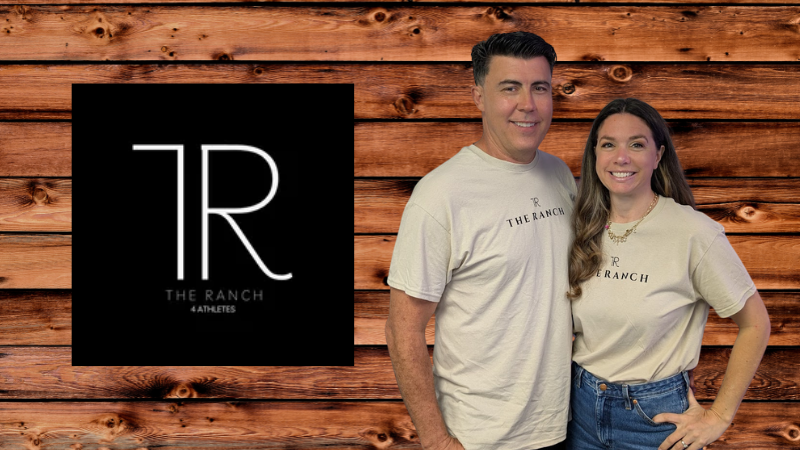
The Ranch 4 Athletes in Huntsville offers free visits, rescued animals and a quiet setting for college athletes and others dealing with pressure on and off the field.
A ranch in Huntsville is trying to meet athletes where they are, far from the noise of practices, games and campus life.
The Ranch 4 Athletes, a 501(c)(3) nonprofit founded by Bobby and Lisa Willcox, gives athletes a free place to spend time with rescued animals, eat a meal, rest and step away from the pressure that often follows competitive sports. The ranch sits on 13 acres in Huntsville and has become a regular stop for college athletes, according to the founders.
Bobby and Lisa Willcox say the idea grew out of their own family’s experience in sports and out of a move that brought them from Florida to Walker County.
How the ranch began
Lisa Willcox said the first push came through their oldest daughter, a softball player who struggled with anxiety and panic attacks.
“Our oldest daughter was a softball player and she struggled with anxiety and panic attacks,” Lisa Willcox said. “She loved horses. So, I was like, I’m going to research equine therapy and just see what that’s all about.”
She said a therapy session in Florida made a big difference for their daughter and also changed her own outlook. Lisa Willcox described herself as a city girl who had never been around horses, but after that experience, she felt called to build something around horses and athletes.
The couple already had deep ties to sports. Both were former college athletes. Bobby Willcox coached college football for nearly 10 years. Lisa Willcox played college volleyball before a cancer diagnosis ended her playing career after one year.
They said their time in sports gave them firsthand knowledge of the pressure athletes face, from youth leagues through college.
“We knew that we always wanted to do something with sports,” Lisa Willcox said. “Then we put them in sports and saw the pressure that at a young age these kids deal with.”
She said even in youth sports, families can get caught up in long-term goals too early.
“Our little one was, I think she was 5 years old playing soccer and everybody thinks they’re going pro,” she said. “We’re like, whoa, whoa, whoa. They need something outside of sports as a way to get away from the pressure.”
A coach’s view of pressure
Bobby Willcox said his own coaching career built how he now views athletes and mental strain.
“I was probably the cause of a lot of anxiety and pressure with a lot of young athletes and college athletes because I was that coach,” he said. “I was the one pushing that pressure of we got to be right and focused all the time.”
He said he once saw the sport first and the person second. That changed over time.
“I just kind of thought that’s how it was until I grew up and matured and understood that there’s more to this game than just the ability to get on the field and play, the mindset,” he said.
That view is now built into the ranch’s mission. On its website, The Ranch 4 Athletes says it was founded on the belief that “an athlete’s worth extends far beyond their athletic achievements.”
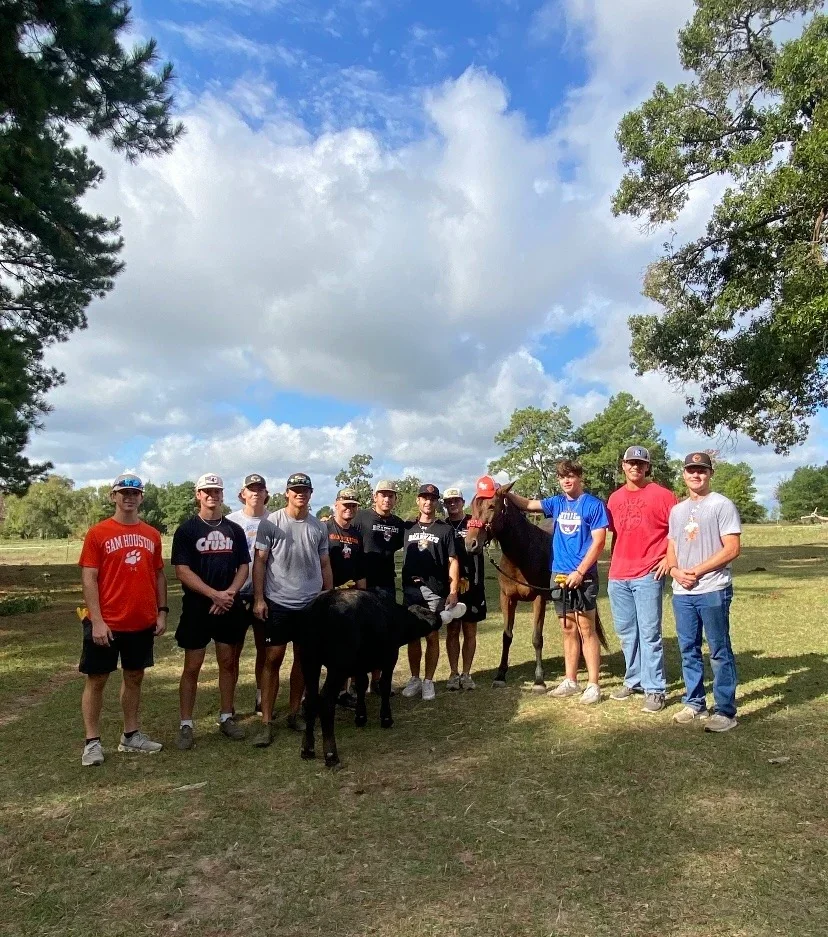
The couple said that idea guides the work they do in Huntsville, especially with college students from Sam Houston and other schools that visit the property.
The move from Florida to Huntsville
The road to Huntsville was not direct.
The Willcoxes said they first hoped to stay in Florida, where they were living across from the beach. But they believed they were being called to start a ranch ministry and could not find land they could afford there.
They then looked to Texas. A deal on a property in Conroe fell through shortly before the closing on their Florida house, leaving the family in a hard spot.
They sold their belongings, moved to Texas, bought an RV and planned to live in it for a short time while they searched for land. Instead, they stayed in the RV for about 11 months, according to the ranch website. During the interview, Lisa Willcox said it was nine months before the land in Huntsville opened up.
The property came through an unexpected source. A neighbor at the RV park approached them and said he had acreage in Huntsville.
Lisa Willcox said the deal came together by handshake, and the family bought the land during the 2021 market.
“We got 13 acres with the house that needed to be repaired and stuff for only 170,000 in the 2021 market,” she said.
The website says the purchase allowed them to start debt-free. It also says the property included two neglected horses, Red and Rannie, which fit with the ranch’s work rescuing abused and neglected animals.
The role of the animals
The ranch first centered on horses, and horses still play a big part in how the Willcoxes work with athletes.
Lisa Willcox said horses can react to a person’s emotional state, which helps athletes see how stress and pressure affect them.
“When we incorporate the horses, we can mimic a pressure situation for an athlete that they face all the time,” she said. “They don’t have to tell us that they’re stressed out. We can watch the horse and the horse is going to let us know.”
She said the lesson is practical. If the athlete stays tense, the horse stays tense. When the athlete calms down, the horse responds.
“So when you learn how to manage your emotions, then the horse is calm and it’s going to do what you want to do,” she said.
The ranch now has far more than horses. The website lists horses, goats, cows, pigs and other animals, many with rescue stories of their own.
Among them are Bodie, a horse adopted from a rescue; Red, a mare that was forced to breed after being born with a foot deformity; Rannie, a horse the ranch says was pushed aside because she was not considered show-worthy; Benny, a retired prison guard horse from Angola Prison in Louisiana; Buzz and Woody, two donkeys rescued after abuse and neglect; Rosie and Ferdinand, twin calves rejected by their mother; and Lulu and Lemon, pigs that came to the ranch under poor conditions.
Lisa Willcox said some of the animals arrived after area residents reached out.
“We started getting calls from everyone in the area,” she said. “Do you want cows?”
At first, she said, the answer was uncertain. But the twin calves became favorites.
“Those cows have brought so much joy to everybody that comes on the ranch,” she said. “They think they’re big lap dogs.”
Who the ranch serves
The ranch works with athletes of different ages, but Bobby Willcox said college athletes have become the main focus.
“We definitely focus more on the college athletes because we understand and what we want is we want you to want to be there,” he said.
He said some younger athletes may arrive because a parent wants them there, which can complicate things. College students usually make the decision for themselves.
The ranch also changed its approach after opening. At first, the founders thought they would need a set structure for visits. That changed once they saw what athletes were asking for.
“When we first started, we thought we’d have structure,” Bobby Willcox said. “And then we realized these kids have structure their whole life. Everything is structured for them.”
Now, he said, athletes can come out and use the ranch in the way that helps them most. Sometimes that means spending time with animals. Sometimes it means eating, resting or playing a game.
“We had two cheerleaders come out yesterday and they wanted to just come and hang out with the animals for a little bit and then they wanted to play pickleball,” he said. “That’s what they needed.”
The ranch is free to use, which the couple said was part of the call they felt from the start.
“Everything we do is free of charge,” Lisa Willcox said. “We don’t charge anybody to come on to the ranch.”
She added, “Our only requirement is that you want to be there.”
Sunday meals and local support
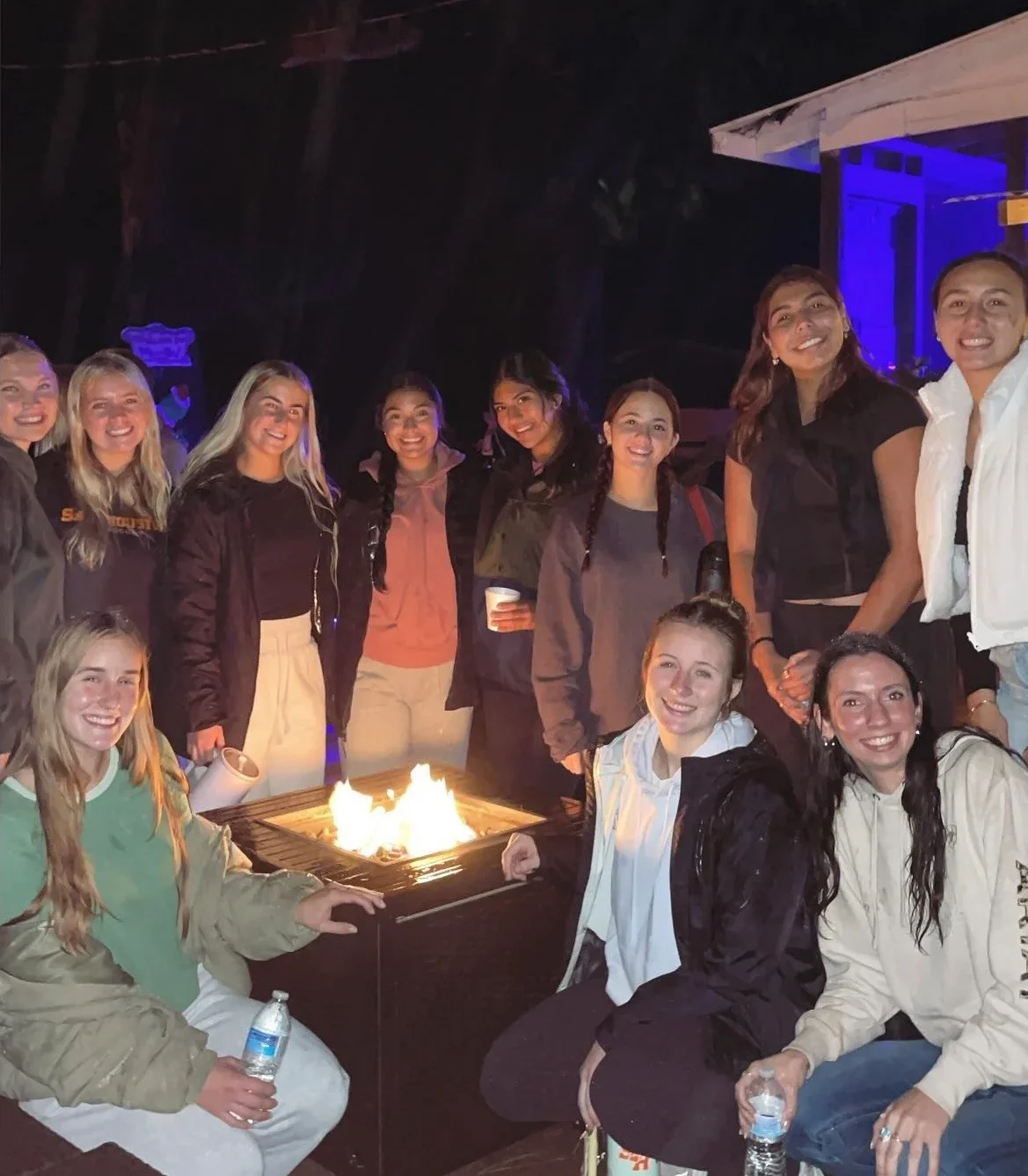
The ranch also hosts a monthly Sunday dinner for athletes. Lisa Willcox said about 100 athletes come out for those meals.
“That was another God spoke to me and said, ‘You need to feed them physically and mentally, emotionally, all of that,’” she said. “So that’s definitely a big opportunity.”
She said the meals are free and are meant to feel like a traditional Sunday gathering around a table.
For a nonprofit operation with acreage, animals and food costs, support from the public matters. The ranch accepts financial donations through its website and also welcomes food donations and sponsors.
The website says donations are tax-deductible to the extent allowed by law. It lists the organization’s EIN as 33-1366877.
The ranch also hosts teams. Bobby Willcox said New Mexico State’s softball team visited after a series at Sam Houston. He said other universities can also arrange visits when teams are in town.
A local place with a wider reach
The work is rooted in Huntsville, but the reach has spread through college sports connections and word of mouth.
The ranch website says the group’s mission is to help athletes understand their identity beyond the scoreboard. The founders say that mission has drawn in athletes, their roommates, classmates and friends.
Lisa Willcox said one visitor who was no longer an athlete thought she might have to prove her sports background before coming.
“She thought she was going to have to show videos of her playing her sport,” Lisa Willcox said. “I was like, ‘No, no, no. That’s not a requirement. That’s not what we do here.’”
That approach may help explain why the ranch has found a place in a college town like Huntsville, where student-athletes face the same demands seen across the country: performance pressure, roster uncertainty, injuries and the constant pace of school and sport.
For the Willcoxes, the answer has been simple. Open the gate, let people come and let the ranch do its work.
How to reach the ranch
Athletes or families who want to visit can reach the nonprofit through the contact page at theranch4athletes.com or through its social media pages, according to Lisa Willcox. She said Instagram is often the easiest way for athletes to connect.
The website also includes donation information, sponsor options for animals and more details about the ranch’s story and mission.
For Huntsville, the ranch adds one more piece to the area’s network of nonprofits serving students and families. In this case, the setting is not a classroom, clinic or office. It is a pasture, a porch and a group of rescued animals waiting at the gate.